



How to Make Important Decisions

I’ll be the first to admit that I have difficulty making decisions and would rather someone else make them for me. That may sound unusual to some people, but for those who feel the same as I do, this article is for you.
Life is full of decisions, and we all must make them daily—decisions about what to wear, what to eat, and even what to do. But with metastatic breast cancer, the decisions feel much more serious.
Understanding my struggle with decision-making
When I say I want someone else to make my decisions, I strictly mean the more significant choices, not what to wear or eat. That makes more sense if I explain that I have high-functioning anxiety. Most people with anxiety have a hard time regarding choices and decisions.
For me, it is a constant worry about making the wrong decision or choice concerning someone else. I was like that my whole life, which may be why I settled into an abusive relationship for nine years. Those with anxiety and difficulty making decisions might allow others to tell them what to do.

The weight of medical choices in metastatic breast cancer
So, when I was diagnosed with metastatic breast cancer, it threw me for a loop. After receiving a terminal diagnosis, there is nothing but decisions to make for the rest of your life. These health-related decisions include:
- Where to receive care
- What treatments to try
- What doctor or specialist to consult
- When to get a second opinion
- How to afford healthcare services
- What surgeries to undergo (mastectomy, hysterectomy, etc.)
Deciding to change doctors: A turning point in my care
Let me share a story about a massive decision regarding my cancer that I had to make recently. I had been with my oncologist for two years, starting with metastases to my bones and eventually to my brain. The cancer center was a prominent center locally but not the most well-known.
My doctor was very compassionate initially, but I eventually felt like a number to them. As a terminal cancer patient, I expected more personal treatment, like phone calls about scans and tests. I always had to call for my results; while that may be the norm, I wanted my healthcare team to take more initiative. Also, the center's decor was depressing, with brown walls, no pictures, and stains on the old carpet. I realize I might sound petty, but this is where I will be going every 21 days for the rest of my life.
Seeking trusted advice
So I asked a friend, and she said her doctor was terrific. Secretly, I had been thinking about changing doctors for about a year before I talked to this friend. This new doctor sounded wonderful, but I hesitated to actually switch. What if he was not better than my current doctor, and I had to go somewhere else? I was scared and anxious but finally decided to go for a "meet and greet" to see how I felt. I loved him from the start.
Featured Forum
View all responsesStrategies for building self-trust and confidence
That was a significant choice I made on my own and for myself, and it benefited me. So, how can we stop doubting ourselves regarding cancer care and build more self-trust?
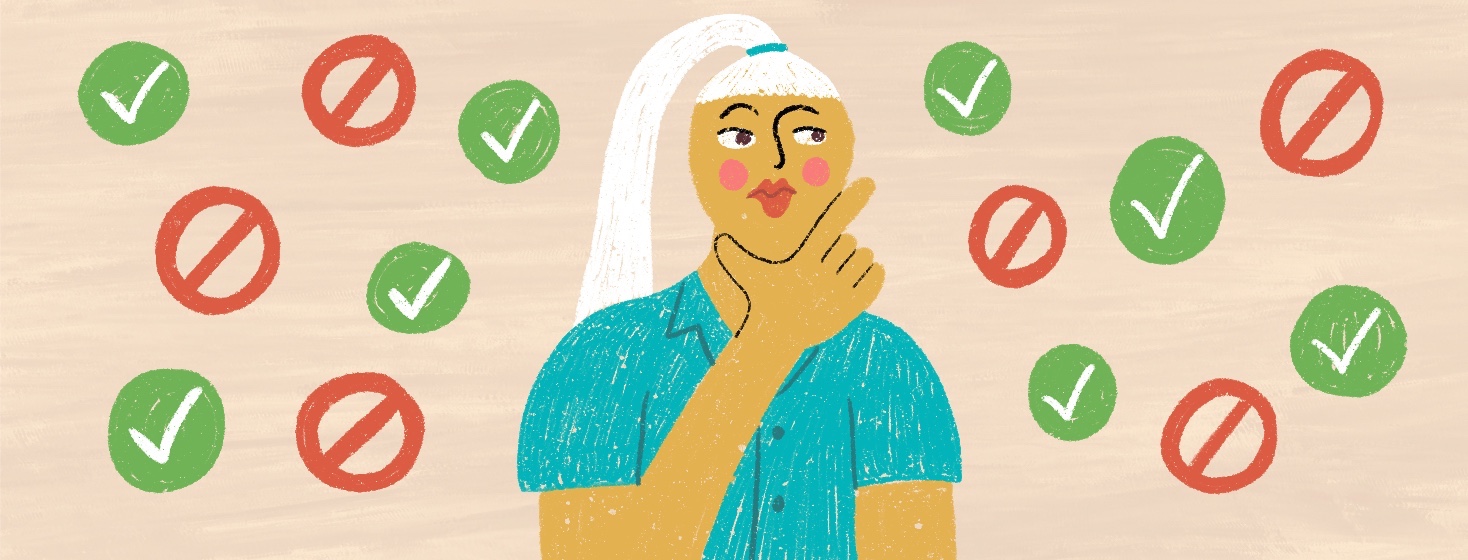
- Make a "pros and cons" list of the decision you are faced with.
- Ask for the opinions of those you trust who have been in similar situations.
- Do your research and consult reputable sources of information.
If you are religious or spiritual, you can turn to your spiritual practices or pray about making a decision.
Consider these 3 questions
Another helpful exercise might be to consider these three questions before making a choice that you're apprehensive about:
- What is the worst possible outcome?
- What is the best possible outcome?
- What is the most likely outcome?
You will find that asking yourself these three questions can ease anxiety greatly.
How do you decide when you are confused or uneasy about what to do?
Join the conversation